
The Fragrance Experiment That Changed Everything
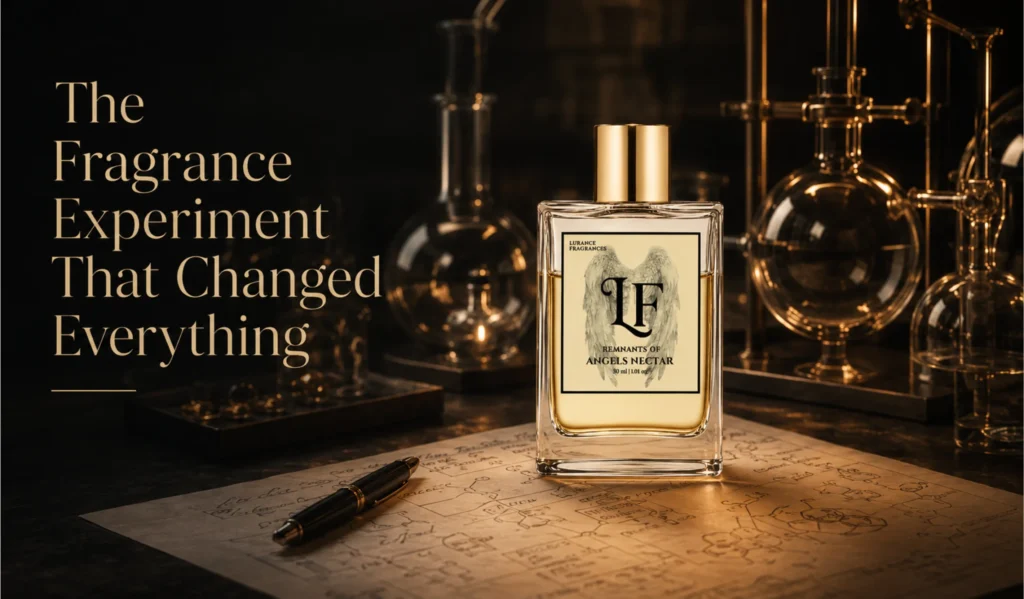
“Eighteen months, thousands of failures, and a refusal to ship before the formula was right. Inside the unusually slow making of a fragrance house built for Indian heat.”
Most fragrance launches today follow a familiar script. A concept is approved, a fragrance house is briefed, a formula is selected from an existing library, and within months, a bottle sits on a shelf. Speed sells. Trend cycles move faster than supply chains, and brands have learned to treat scent the way fashion treats a silhouette: ship it before the season ends.
Some fragrance houses refuse that script entirely.
A Different Clock
Lurance Fragrances spent close to 18 months developing its first collection before a single bottle reached a customer. In an industry where launch timelines are increasingly measured in weeks, that number sounds almost defiant. It was not stubbornness. It was a response to a problem most Indian consumers already knew intimately but had stopped expecting anyone to solve: perfume that survives Indian heat.
India is a different chemical environment altogether. Heat accelerates evaporation. Sweat interacts with oils in unpredictable ways. What smells balanced in a temperate lab can collapse within hours on skin exposed to forty-degree afternoons.
Where Formulas Go Wrong
Ingredient interaction is rarely intuitive, even to trained perfumers. Two compounds that behave beautifully in isolation can destabilize each other entirely once combined, shifting in volatility, clashing in projection, or simply vanishing under sustained heat. Lurance’s team treated this as the central problem to solve, not a footnote.
Thousands of combinations were tested and discarded. Some formulations smelled exceptional on first application but faded within hours. Others held their structure but lacked any real identity, smelling competent rather than distinctive. A fragrance that performs but does not feel original is, in a crowded market, still a failure. Longevity, projection, stability, and originality had to arrive together, not as trade-offs against one another.
“Each rejected formulation represented weeks of indoor and outdoor testing, reformulation, and retesting under real heat rather than simulated conditions.”
That simultaneous requirement is what stretched the timeline. Each rejected formulation represented weeks of indoor and outdoor testing, reformulation, and retesting under real heat rather than simulated conditions.
Patience as Strategy
What emerged from that process were eight fragrances built at significantly higher concentrations than conventional perfumes, engineered specifically to hold their structure under Indian conditions rather than merely tolerate them. Each one exists because an earlier version was rejected for not being good enough.
This is the part of fragrance development consumers rarely see. A bottle on a shelf does not indicate how many versions came before it, how many were poured out, or how many almost shipped.
“The future of fragrance may not belong to the brands that move fastest. It may belong to the ones willing to spend more time perfecting a formula than promoting it.”